Wheelchair Van Transport for Rural Maryland: A Guide
Table of Contents
Why Rural Maryland Wheelchair Van Transport Takes Extra Planning
Wheelchair Van Service for Medical Appointments: What to Expect
Ambulatory, Wheelchair, and Stretcher Transportation Compared
Understanding Wheelchair Transportation Cost and Payment Options
Safety Checks and Rural Pickup Logistics to Confirm Before You Ride
Last Updated: October 17, 2026
Why Rural Maryland Wheelchair Van Transport Takes Extra Planning
Wheelchair van transport for rural in Maryland requires more planning than a city trip. Pickup points sit far apart, backup vehicles are scarce, and a single missed connection can cost you an appointment. (Source: Federal Motor Carrier Safety Administration (FMCSA) regulations)
Rural scheduling is unforgiving. A driver may cross two counties to reach one rider. If that van breaks down, there is no second one five minutes away.
Three factors make rural trips harder:
Long deadhead miles. Vans travel empty to reach a pickup.
Fewer providers. Many companies cluster near cities and skip outer areas.
Thin margins for error. A late start snowballs across every stop.
Charles County, Frederick County, Washington County, and the rural edges of Montgomery County all show this pattern. Plan the trip as a chain, not a single ride.

Watch Out Booking a rural ride the same day is the most common mistake. Providers need lead time to route a van to remote pickup locations. Call at least several days ahead for non-urgent trips.
Wheelchair Van Service for Medical Appointments: What to Expect
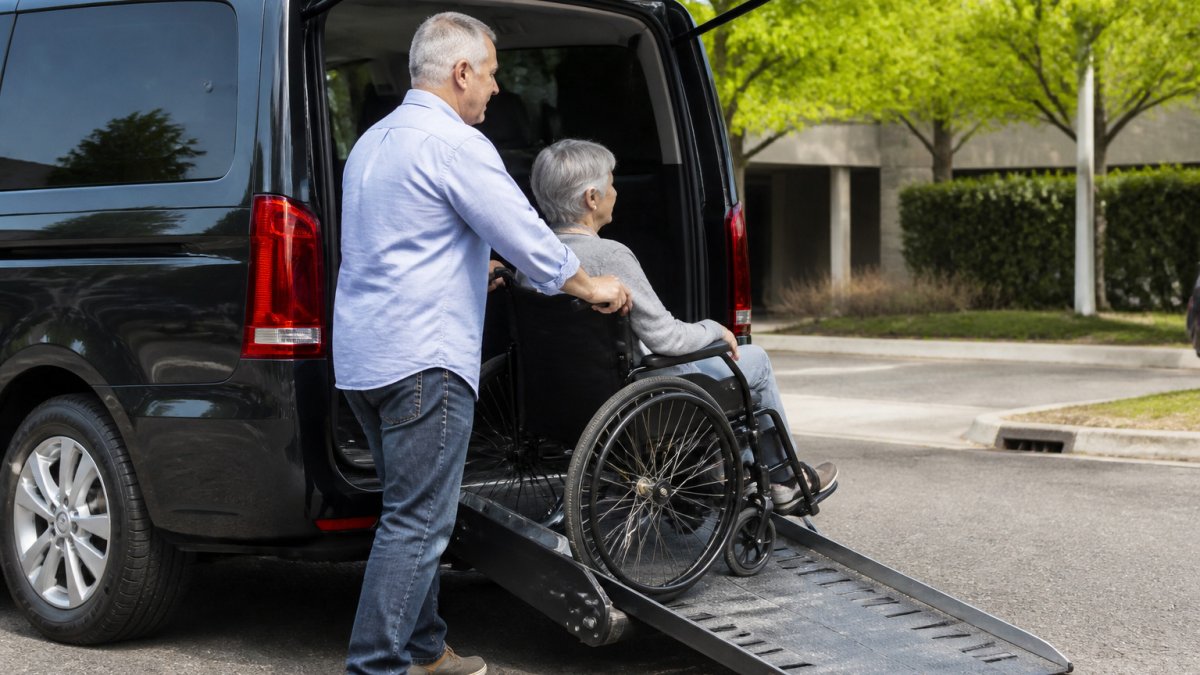
Wheelchair van service for medical appointments follows a set pattern. A trained driver arrives in a wheelchair-accessible vehicle, secures the chair, and delivers you to the door.
Here is what a typical medical trip includes:
A confirmation call or message before pickup day
Arrival at your exterior door, not the street
Secure tie-down of your wheelchair or powerchair
Hands-on assistance from the door to the vehicle
Drop-off at the clinic entrance
A return pickup at a scheduled time
Ask about wait time too. If your appointment runs long, you need to know the policy before you ride.
Non-emergency medical transportation is not an ambulance. It suits stable patients going to dialysis, therapy, or follow-up visits. For urgent symptoms, call emergency services.
Ambulatory, Wheelchair, and Stretcher Transportation Compared
Ambulatory transportation serves people who can walk with little or no help. Wheelchair transportation serves riders who stay in their chair.
Service Type | Who It Suits | What to Expect |
Ambulatory | Riders who walk with a cane or walker | Help getting in and out, standard seat |
Wheelchair | Riders who stay in a manual chair or powerchair | Ramp or lift, secure tie-down |
Stretcher | Riders who must lie flat | Trained crew, stretcher vehicle |
Pick the wrong type and the driver may have to turn back. That wastes your day and your slot.
If your needs change between visits, say so. A patient recovering from surgery may need a wheelchair one week and ambulatory service the next.
Your Wheelchair Transportation Booking Checklist
A wheelchair transportation booking checklist keeps a rural trip on track. Use it every time, especially for long-distance pickups. Small details decide whether the van arrives on time. The checklist below is built for rural addresses, where a dispatcher cannot rely on a quick drive-by to find you.
Before you call: gather the details
Full pickup address, plus written directions from the nearest paved road
Gate codes, lockbox codes, or a note that someone will meet the van at the driveway
A landmark the driver can see from the road ("third driveway past the white barn on Route 6")
Wheelchair type (manual or power), seat width, and approximate weight
Any oxygen, IV, or medical equipment that rides with you
What to ask the dispatcher
Is my address inside your service area? Rural coverage often stops at a county line or a mileage radius. Get a yes or no, not "we should be able to."
How much lead time do you need? Same-day rural requests are the most common failure point. Ask for the provider's minimum notice for a remote pickup and book at least several days ahead for non-urgent trips.
What vehicle will be sent? Confirm ramp versus lift, and whether the vehicle can handle your chair's width and weight.
Who provides the assistance? Door-to-door, bedside, or curb only. Ask whether the driver can enter the home.
What is the wait-time policy? If your appointment runs long, you need to know the per-minute charge or the drop-off-and-return rule before you ride.
What is the cancellation policy? Ask about the cutoff window and any fee.
How will the return trip be confirmed? Get the plan in writing: who calls whom, and at what time.
What is the day-of contact number? Save it in your phone before pickup day.
Confirm the vehicle and pickup the day before
Call or message the provider the day before the trip. Confirm the pickup window, the driver's name if available, and the vehicle type. Re-state the gate code and landmark. If the forecast calls for snow or ice, ask whether the driveway is passable for a van and whether the pickup time should shift.
Pro Tip Give the dispatcher a landmark, not just an address. Rural routes often lack clear house numbers. "Third driveway past the white barn on Route 6" gets a driver there faster than a street number alone.
If plans change
Call as soon as you know. A moved appointment, a hospital discharge that runs late, or a canceled visit should be reported before the van leaves its base. Rural providers route vehicles across long distances, and a late cancellation can leave you without a return trip. Ask what the backup plan is if the driver is delayed, a second vehicle, a later window, or a rescheduled trip.
Understanding Wheelchair Transportation Cost and Payment Options
Wheelchair transportation cost depends on distance, trip type, and whether you pay privately or through a program. Rural trips usually cost more because the van travels farther to reach you and may return empty. Contact Transfer 4 U for a current quote.
How private-pay fares are usually built
Ask which components apply to your ride:
Base fare or pickup fee. A flat charge for sending the vehicle.
Per-mile charge. Applied to the loaded distance, and sometimes to deadhead miles the van travels empty to reach a rural address.
Wait time. Charged per minute or per quarter-hour after a grace period.
Extra stops. A charge for a pharmacy or lab stop between home and the appointment.
After-hours or weekend surcharge. Common for early dialysis runs and hospital discharges.
Payment sources to check
Private pay. You pay out of pocket for the ride.
Medicaid NEMT. Covered trips for eligible riders, usually to medical appointments. See the next section for how eligibility works.
Insurance. Some Medicare Advantage and commercial plans cover non-emergency medical transport; call the number on your card and ask for the transportation benefit.
Programs and waivers. Certain state programs and disability waivers help with transport costs. Ask your case manager whether a transportation benefit applies.
Health savings accounts. Some riders can use HSA or FSA funds for medically necessary transport; confirm with the plan administrator.
Questions to ask before you book
What is the total cost, itemized by base, mileage, and wait time?
Are deadhead miles billed, and at what rate?
What does insurance or Medicaid cover, and what will I owe?
What is the cancellation cutoff and the late-cancellation fee?
Is a deposit required for a long rural trip?
What payment methods do you accept on trip day?
Get answers in writing where you can, an email or text confirmation protects you if the final bill differs from the quote.
Watch Out A low quote means little if the van will not come to your address. Rural riders should confirm the pickup is inside the provider's service area before comparing prices. Ask for the quote in writing with the pickup address included.
Why rural quotes vary so much
Two providers can quote the same appointment very differently because of how they handle the return trip. A provider that keeps the van in the area during your appointment may charge wait time; one that leaves and comes back may charge two loaded trips plus deadhead. Ask which model applies. For long appointments, dialysis, infusion, therapy, the wait-time model can cost more than a round-trip quote, so compare both.
How Maryland Medicaid NEMT Fits Into Your Ride Plan
Maryland Medicaid NEMT covers non-emergency rides to medical appointments for eligible members (Assurance of Transportation). It is not automatic. You must qualify, and the trip must meet program rules. Confirm your eligibility and coverage with Maryland's Medicaid program before you rely on it.
Here is how to build a plan around it:
Check whether you qualify for Medicaid NEMT.
Confirm the trip is covered (most medical appointments are).
Request the ride well ahead of your appointment.
Keep your appointment details ready when you call.
Have a backup plan if the request is denied or delayed.
Medicaid NEMT and private wheelchair van service can work together. Use NEMT for covered medical trips. Use a private provider for errands, shopping, or trips NEMT will not cover.
Key Takeaway Never assume a ride is covered. Confirm eligibility and coverage directly with Maryland's Medicaid program, then book early. A confirmed plan beats a hopeful one.
Safety Checks and Rural Pickup Logistics to Confirm Before You Ride
Safety checks protect you on every trip, and rural pickups need extra confirmation. Ask about the vehicle and the driver before you ride. A good provider answers without hesitation.
Confirm these points:
Equipment handling. Oxygen tanks and medical gear are secured safely.
Service animals. Confirm the animal can ride with you.
Pickup logistics. Share gate codes, driveway notes, and a phone number.
Rural routes add their own risks. Long drives, unpaved driveways, and poor cell service can delay a pickup. Give the dispatcher a backup contact. Confirm the return trip the morning of your appointment.
Watch Out Skipping the service-animal question causes real problems. Confirm before booking day that your service dog can ride. A driver who arrives unprepared may refuse the trip, and you lose the slot.
Conclusion
Rural wheelchair van transport takes planning, but a clear checklist and the right provider make it manageable. Transfer 4 U offers specialized transportation for wheelchair users across Maryland, with door-to-door assistance, room for medical equipment and pets, and personalized service for riders of all ages. We help you reach medical appointments, hospital discharges, and daily errands with comfort and independence.
Frequently Asked Questions
What is the Medicaid NEMT program in Maryland?
Maryland Medicaid's non-emergency medical transportation benefit, often called NEMT, helps eligible enrollees get to covered medical appointments when they have no other way to travel. Coverage rules, scheduling windows, and which ride types are approved depend on your specific Medicaid plan, so confirm eligibility with your plan or the state Medicaid office before booking. Many rural riders use NEMT for recurring appointments and arrange private wheelchair van transport when a trip falls outside the benefit or needs same-day flexibility.
How much does a wheelchair van transport cost?
Wheelchair transportation cost varies by distance, trip type, wait time, and the level of assistance you need. Ask for a written quote that lists the base fare, mileage, any wait-time charges, and cancellation terms before you confirm. If you use Maryland Medicaid NEMT, check whether the trip is covered first, since that can change what you pay out of pocket.
How far in advance should I arrange a wheelchair van ride?
For rural pickups, book as early as your appointment schedule allows, ideally several business days ahead, because providers route vans across wide areas and fill slots quickly. Same-day requests are sometimes possible but depend on availability in your county. If your appointment time is fixed, such as a dialysis slot or a surgical check-in, reserve the ride and the return trip together so the driver is scheduled to come back for you rather than leaving you to find a second ride.
Can wheelchair van transportation accommodate mobility equipment and service animals?
Accessible vans are built to secure a wheelchair or powerchair in place, and many can carry additional equipment such as oxygen tanks or a folding walker if you mention it when booking. Service animals are generally welcome, but tell the provider in advance so the driver can plan space and confirm any paperwork. Share the weight and dimensions of your mobility device, whether it folds, and any special handling needs. Confirming these details at booking prevents a van from arriving that cannot safely fit your setup.
Rural trips reward preparation. Confirm your pickup details, your equipment needs, and your payment plan before the day arrives. Transfer 4 U is ready to help you build a ride plan that works for your mobility needs. Reach out to our team to book your next trip and travel with confidence.
Contact Us


Comments