Can Medical Vans Transport Service Dogs? What to Know
Table of Contents
Last Updated: October 18, 2026
Can Medical Vans Transport Service Dogs? The Short Answer
Yes, if you're wondering can medical vans transport service dogs, the answer is that they can, and in most cases they must. Under the Americans with Disabilities Act, a service animal is a dog trained to perform a task for a person with a disability, and it is allowed to accompany its handler in nearly every setting the public can enter. That includes non-emergency medical transportation.
The short answer is simple: a service dog rides with you, not in a cage, not in the trunk, and not left at home.
Service Animals vs. Pets and ESAs on Medical Rides
A service dog is not the same as a pet or an emotional support animal. Federal rules treat them differently, and that difference decides who gets a seat.
A service animal is a dog trained to do a specific task for a person with a disability.
An emotional support animal (ESA) provides comfort by its presence alone. An ESA is not trained for a task.
Here's how the two compare on a medical ride:
Animal type | Task-trained | ADA access rights | Typical van policy |
Service dog | Yes | Yes | Allowed with handler |
Emotional support animal | No | No | Provider discretion |
Pet | No | No | Usually not allowed |
A common mistake is assuming any well-behaved dog counts. The key question is training for a disability-related task, not good manners.
Medical Transportation Service Animal Policy: What Providers Must Follow
Providers must allow a service dog to ride with its handler. The Americans with Disabilities Act applies to private companies that offer transportation to the public, so a medical van service generally cannot turn away a trained service dog.
It does not work the same way in every vehicle. Emergency ambulance services operate under different rules and clinical priorities, and public transit agencies set their own service animal policies under separate federal transportation regulations. If your trip is a scheduled medical van ride, the ADA framework below is the one that applies.
What a provider may and may not do
A provider can still set basic rules, and most written policies include the same four:
The dog must stay under the handler's control, usually on a leash or harness.
The dog must be housebroken.
The dog cannot pose a direct threat to the health or safety of others.
The dog cannot fundamentally alter the service or disrupt the vehicle or other riders.
A provider may also ask two questions, and only two: is the dog a service animal required because of a disability, and what work or task has the dog been trained to perform. They cannot demand paperwork, ask about your diagnosis, require the dog to demonstrate a task, or charge a pet fee or deposit. A service dog is not a pet under the ADA, so pet fees do not apply.
The control standard in practice
"Under control" is the phrase that decides most disputes. A handler can keep a service dog controlled with a leash, harness, or tether, or, if those interfere with the dog's task or the handler's disability, by voice, signal, or other effective means. A dog that barks repeatedly, lunges, or wanders the aisle can be removed for disruption, but the handler is still entitled to reboard without the dog. The removal is about behavior, not about the animal's status.
What providers should confirm at booking
A well-run provider uses the booking call to plan the vehicle, not to screen the animal. Expect them to confirm floor space, whether the dog travels with a wheelchair, and whether the rider needs extra boarding time. None of that is a legal condition of service, it is operational planning, and a provider that turns it into a paperwork requirement has crossed the line.
Watch Out A provider that refuses a service dog without a valid reason, charges a "pet deposit" for one, or demands vaccination records or "certification" as a condition of the ride may be violating the ADA. Note the driver's name, the time, and the reason given. You can file a complaint with the Department of Justice.
Non-Emergency Medical Transportation With a Service Dog: What to Expect
Non-emergency medical transportation with a service dog works much like any other scheduled ride, with a few extra steps. You book ahead, confirm the animal is coming, and arrive with the dog under control. The part most guides skip is that "medical transport" is not one thing, and the rules and practical realities differ by vehicle type.
Medical vans versus ambulances versus public transit
A non-emergency medical van is a scheduled, pre-booked ride for a medical appointment, discharge, or therapy session. It is not an emergency vehicle.
An ambulance is a different setting. Emergency medical services prioritize clinical care and scene safety, and crew members may need the floor space and hands free to treat you.
Public transit, buses, paratransit, light rail, falls under separate federal transportation rules that also protect service animals.
The practical takeaway: if you are booking a scheduled medical van, the ADA access rule applies and the provider should plan for the dog.
What a typical scheduled van trip looks like
Most scheduled medical van trips follow a simple pattern:
You book the ride and note that a service dog will travel with you.
The provider confirms the vehicle can fit the dog safely.
The driver arrives and helps you board.
The dog rides on the floor near you, not on a seat.
The driver helps you off at the appointment.
Advance notice is not a legal requirement, but telling the provider helps them send the right vehicle. A van with open floor space handles a service dog far better than a cramped sedan. For a wheelchair-accessible van, the key question is whether there is floor space beside the tied-down chair that stays clear of the lift path and the aisle.
Vehicle-specific accommodation
What "room for the dog" means depends on the vehicle:
Wheelchair-accessible van with a lift or ramp: the dog needs a spot on the floor beside the secured wheelchair, out of the lift path and clear of the tie-down straps. Large dogs may need the front passenger floor area or a second row with the seat folded.
Sedan or SUV: the dog typically rides on the floor in the back seat area or in a cargo space separated from the rider. Confirm the layout when you book.
Stretcher van: floor space is tighter, and the dog may need to ride in the front passenger area or beside the stretcher, depending on the configuration.
Expect the dog to stay on the floor, near your feet or beside your wheelchair. This keeps the aisle clear and the dog safe. If your dog is large, ask for a vehicle with extra floor room when you book, a little planning avoids a tight squeeze.
Pro Tip Ask the dispatcher one specific question when booking: "Where will my service dog ride in the vehicle?" The answer tells you whether the provider has actually planned for the animal or is just saying yes.
Wheelchair Transportation With a Service Dog: Space, Safety, and Positioning
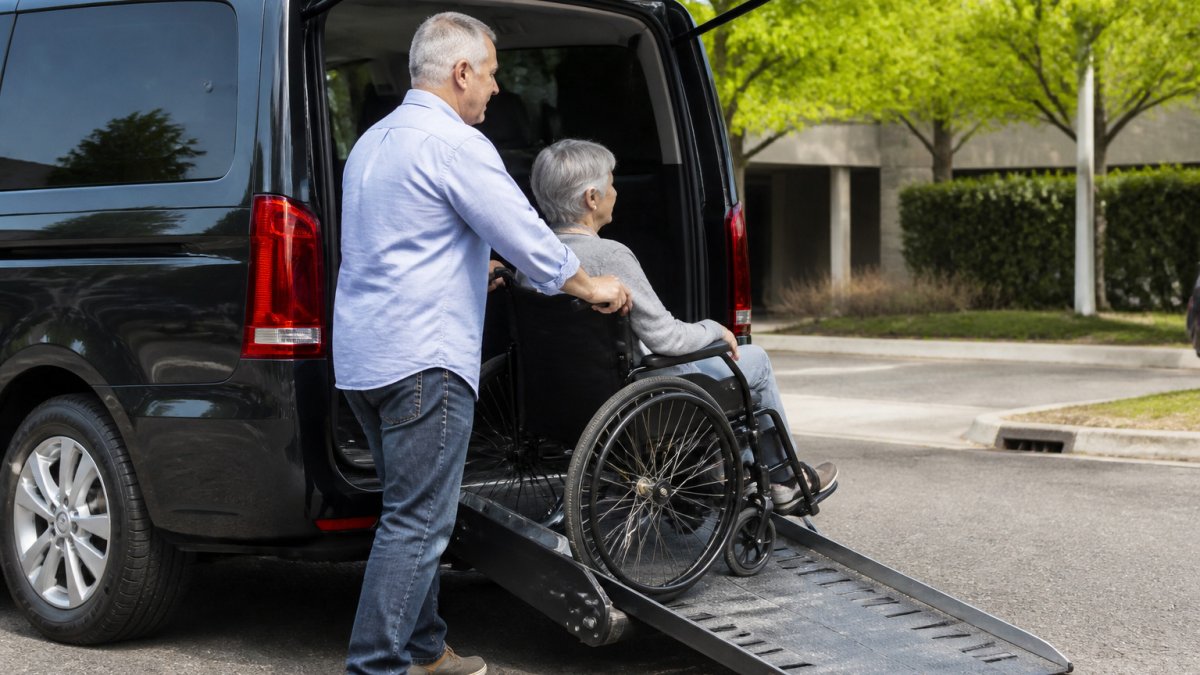
Wheelchair transportation with a service dog comes down to space and positioning. The dog needs a safe spot that stays clear of the wheelchair's tie-downs and the aisle.

Here's what good positioning looks like:
The wheelchair is secured with straps at four points.
The rider wears a seatbelt that works with the chair.
The dog lies on the floor beside the chair, out of the aisle.
The dog stays leashed or harnessed for the whole trip.
What most guides miss is the tie-down zone. A dog that wanders under the straps can get caught when the driver locks the chair in place. Keep the dog to one side and settled before the van moves.
If your dog is large, ask for a vehicle with extra floor room when you book. A little planning avoids a tight squeeze.
Pro Tip Bring a small mat or blanket for the dog to lie on. It gives the dog a clear "place" on the van floor and keeps it from pacing during the ride.
Booking Checklist: Service Dog Transportation to Medical Appointments
Service dog transportation to medical appointments goes smoothly when you plan ahead. Use this checklist before every trip.
Book the ride and state that a service dog will travel with you.
Confirm the vehicle has floor space for the dog.
Ask whether the driver is trained to assist riders with your mobility needs.
Note your pickup time and expected appointment length.
Pack the dog's leash, harness, and any needed supplies.
Plan a relief break for the dog before pickup.
Keep your phone charged in case the ride runs late.
Save the provider's contact number for changes.
Our team provides door-to-door help for wheelchair users, and we plan around medical equipment and special requirements. That includes making room for a service dog on the ride.
A last-minute cancellation or a long appointment can throw off a schedule. Tell the provider as soon as plans change so the driver can adjust.
If a Driver Refuses Your Service Dog: Steps to Take
A refusal is rare, but it happens. If a driver refuses your service dog, stay calm and follow these steps.
State clearly that the dog is a service animal trained for a disability-related task.
Remind the driver that the ADA requires access for service dogs.
Ask to speak with a dispatcher or supervisor.
Note the driver's name, the time, and the reason given.
If the ride is still refused, arrange other transport and file a complaint.
You can file a complaint with the Department of Justice, and some states have their own civil rights offices. Keep your notes factual. A clear record makes the complaint stronger.
The thing nobody tells you is that a driver may not know the rules. A calm, firm explanation often resolves it on the spot. If it doesn't, the complaint process exists for exactly this reason.
Conclusion
Riding to an appointment with a service dog should not be a fight. The law is on your side, and a good provider plans for it. The challenge is finding a ride that has the space and training to help.
That is where Transfer 4 U comes in. We provide non-emergency medical transportation built for wheelchair users, with door-to-door help and room for medical equipment and service animals. Our team plans each trip around your needs, from hospital discharges to routine visits.
Frequently Asked Questions
Can a non-emergency medical transportation van take a service dog?
Yes. Under the Americans with Disabilities Act, transportation providers that serve the public must allow service dogs to accompany their handlers. This includes non-emergency medical transportation such as medical vans. The dog must be trained to perform a disability-related task and remain under the handler's control. Providers can ask only two questions: whether the dog is required because of a disability, and what task it performs. They cannot demand documentation or charge an extra fee for the dog.
Do I need to tell the transportation provider that I'm bringing a service dog?
You are not legally required to disclose a service dog in advance, but telling the provider when you book helps the trip go smoothly. It lets the dispatcher assign a vehicle with enough floor space for the dog and brief the driver. Mention the dog's size and breed so the crew can plan the seating and safe positioning. Advance notice is a courtesy, not a condition of access, and a provider cannot refuse your ride simply because you did not call ahead.
Can a medical transportation provider charge extra for a service dog?
No. A service dog is not a pet, and providers cannot charge a separate fee, surcharge, or deposit for one. The dog must be allowed to ride with the handler at no additional cost. A provider may only charge for actual damage the dog causes, on the same terms it would charge any passenger for damage. If you are quoted an extra fee for a service animal, ask for the policy in writing and consider filing a complaint with the appropriate oversight body.
What should I ask before booking a medical ride with a service dog?
Ask four things: whether the vehicle has floor space for a dog beside the wheelchair or seat, how the crew secures wheelchairs and positions the dog during transport, and what the cancellation policy is if your appointment runs long. Confirm the pickup address and whether the driver can assist with mobility equipment. Getting these answers in writing before the trip reduces surprises and helps you plan for hospital discharges or scheduled visits.
Contact Us


Comments