Are Professional Transport Services Worth It for Seniors?
Quick Summary
Professional transport can help seniors who face mobility limits, medication side effects, or cognitive changes attend medical appointments reliably. Its value depends on the patient's mobility, the type of appointment, and how dependable the service needs to be. Families should weigh it against paratransit, volunteer drivers, and family caregivers.
Mobility limits, medication side effects, and cognitive changes can make a simple trip to the doctor difficult.
Public paratransit, volunteer driver programs, and family caregivers are alternatives to professional transport.
Ask whether the driver secures the chair facing forward and whether the wheelchair is rated for transport.
Tell the provider about the wheelchair and medical equipment before booking any ride.
Plan the ride before discharge day, since patients may be weak or medicated after a hospital stay.
Table of Contents
Why Professional Transport Matters for Elderly Patients
Transfer 4 U provides non-emergency medical transportation across Maryland, with a focus on wheelchair users.
Mobility limits, medication side effects, and cognitive changes can all make a simple trip to the doctor difficult.
Many families consider whether a relative or neighbor can cover these trips.
Professional transport is also not the only option. Public paratransit, volunteer driver programs, and family caregivers all have a role. The right choice depends on the patient's mobility, the type of appointment, and how dependable the service needs to be.
Access to Medical Appointments and Continuity of Care
Transportation can be one consideration when planning follow-up visits, lab work, and specialist appointments.
Transportation can be a consideration when planning access to routine and preventive care.
When comparing providers, ask how they handle recurring appointments and what happens when a driver is delayed.
Wheelchair Transportation for Seniors: Accessibility and Mobility Assistance

Transfer 4 U accommodates medical equipment and pets. Before booking, tell the provider about the equipment the patient uses.
The four dimensions of accessibility
Most families think of accessibility as a ramp or lift. In practice, a ride works only when four dimensions line up:
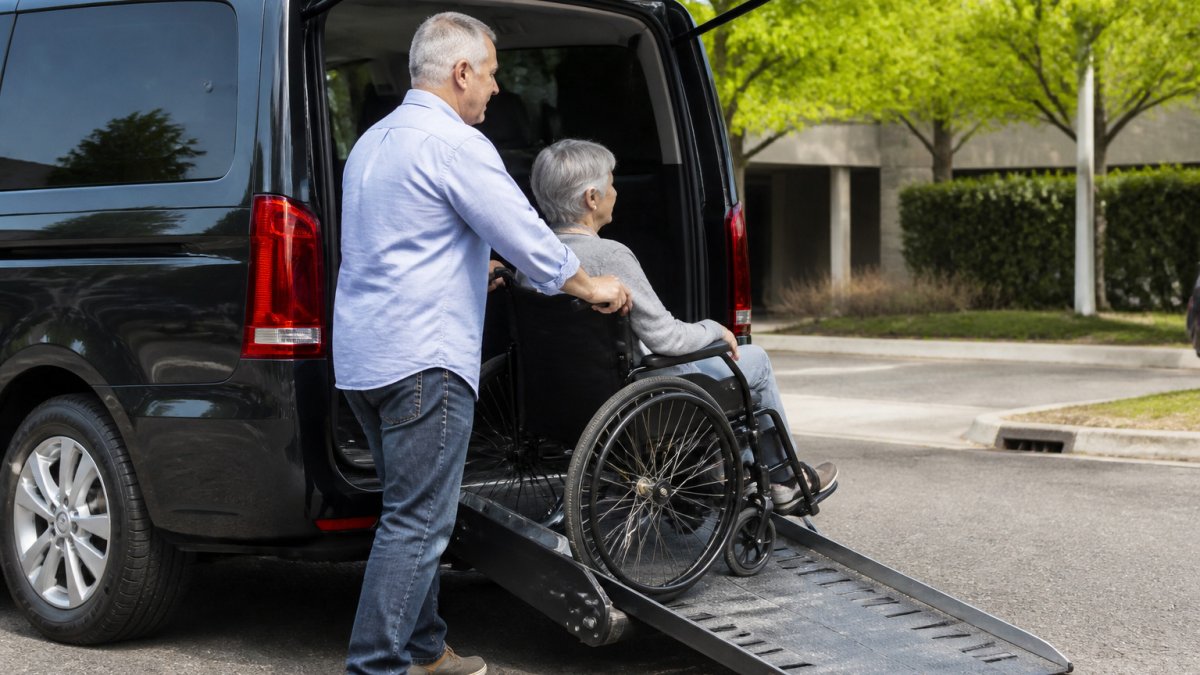
Physical access. The vehicle can hold the wheelchair or mobility device, the lift or ramp operates, and the driver can secure the chair to the floor with a four-point tie-down and a lap-and-shoulder belt. Ask whether the driver secures the chair facing forward and whether the wheelchair itself is rated for transport, not every chair is.
Transfer support. Some passengers stay in their chair; others transfer to a vehicle seat. Ask whether the driver is trained to assist with a standing pivot, a sliding board transfer, or a two-person lift, and what the company's policy is when a passenger cannot transfer without clinical help. A driver is not a nurse, and a reputable provider will say so plainly.
Sensory access. Passengers with low vision, hearing loss, or sensitivity to noise and motion may need a driver who announces each step, keeps the radio off, and avoids sudden stops. Ask whether the company can note these preferences on the booking.
Cognitive and communication access. A passenger with dementia may need a calm, unhurried driver who reorients them gently and confirms the destination aloud. A passenger who speaks a language other than English may need a driver who can communicate basic instructions or a family member riding along. Ask what the provider can accommodate and put it in the trip notes.
Mobility assistance from door to door
Some seniors can walk short distances with support but cannot manage stairs, curbs, or uneven parking lots. When arranging transportation, describe any relevant physical access needs.
Pro Tip Before the first ride, note any relevant access details, such as steps, thresholds, or tight corners, and share them with the provider.
Equipment and companion checklist
Before booking, tell Transfer 4 U about the passenger's wheelchair and medical equipment, and ask whether the service can accommodate the passenger's needs.
Safe Hospital Discharge and Transport Home
Patients may be weak, medicated, or still adjusting to new limitations after a hospital stay.
Plan the ride before discharge day and tell the transport provider about the patient's wheelchair and medical equipment.
Family members may wish to plan who will support the patient at home after discharge.
Senior Medical Transportation Services: How to Assess Needs and Choose a Provider
Choosing a senior medical transportation service starts with an honest assessment of the patient's needs. Ask the following questions before comparing providers:
Does the patient use a wheelchair or other equipment?
How often are the trips, and are they recurring or one-time?
Does the patient have medical equipment or a pet to bring?
Are the trips routine appointments or time-sensitive ones like discharge?
Once the needs are clear, evaluate providers against them. For more on vetting companies, read how to find reliable NEMT providers. Ask whether the service can accommodate the patient's needs and what its booking and cancellation terms are.
A decision framework: match the service to the patient
Most families compare providers before they have defined what they actually need. Consider the patient's mobility, equipment, and trip frequency when discussing transportation needs with a provider.
What to ask about training, safeguarding, and emergencies
When comparing providers, ask directly about driver training, screening, emergency procedures, dispatch, and complaint handling.
Measure quality after the first few rides
Families can keep notes about their transportation experience, including pickup timing and whether the service met the passenger's stated needs.
Before comparing providers, the article suggests checking these needs against each service. For a walkthrough of the process, see how to book medical transport.
Question to ask | Why it matters | Example from the article |
Does the patient use a wheelchair or equipment? | Determines vehicle and securement needs | Wheelchair or other equipment |
How often are the trips? | Shows whether service is recurring or one-time | Recurring or one-time |
Does the patient have equipment or a pet to bring? | Affects vehicle capacity | Medical equipment or a pet |
Are trips routine or time-sensitive? | Sets how much scheduling flexibility is needed | Routine appointments or discharge |
Insurance, Medicare Coverage and Payment Eligibility
Some families may need to explore payment options. Contact your coverage provider and check official program sources for current eligibility and coverage details. Transfer 4 U has not provided pricing information here; contact the company for current pricing or a quote. You can review the company's plans and pricing directly.
Booking Your First Ride with Transfer 4 U
To discuss transportation needs, contact Transfer 4 U and provide relevant details about the trip and the passenger's wheelchair and medical equipment. Contact us to ask about service in your area.
Frequently Asked Questions
Does Medicare pay for transportation to medical appointments?
Coverage depends on the plan and program. Check your specific plan details or contact your coverage provider to confirm what applies to you.
What should families look for in transportation for an older adult?
Ask whether the provider can accommodate the passenger's wheelchair, medical equipment, and other stated needs, and whether it serves the passenger's area. Ask about booking and cancellation policies.
Can wheelchair-accessible transportation accommodate medical equipment?
Transfer 4 U accommodates medical equipment and pets. Contact Transfer 4 U to discuss whether it can accommodate your specific equipment and needs.
What is the difference between non-emergency medical transportation and an ambulance?
Transfer 4 U provides non-emergency medical transportation for wheelchair users. Consult your healthcare provider if you are unsure what type of transportation is appropriate for your needs.
Transfer 4 U provides reliable, wheelchair-accessible medical transportation across Maryland, with personalized service for patients of all ages. If you are planning a medical appointment, a hospital discharge, or a regular trip for a loved one, contact our team to talk through the details and book a ride that fits your needs.


Comments